MilliBase
MilliBase taxon details
Anamastigona pulchella (Silvestri, 1894)
1025282 (urn:lsid:marinespecies.org:taxname:1025282)
accepted
Species
Anamastigona attemsi (Verhoeff, 1900) · unaccepted
Anamastigona attemsii (Verhoeff, 1900) · unaccepted
Anamastigona macchiae (Verhoeff, 1930) · unaccepted
Anamastigona pulchellum (Silvestri, 1894) · unaccepted
Craspedosoma pulchellum Silvestri, 1894 · unaccepted
Prodicus attemsi Verhoeff, 1900 · unaccepted (junior subjective synonym)
Prodicus attemsi attemsi Verhoeff, 1900 · unaccepted
Prodicus attemsi macchiae (Verhoeff, 1930) · unaccepted
Prodicus attemsii Verhoeff, 1900 · unaccepted
Prodicus macchiae Verhoeff, 1930 · unaccepted
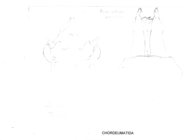
(of Craspedosoma pulchellum Silvestri, 1894) Silvestri, F. (1894). Contribuzione alla conoscenza dei Chilopodi, Symphili, Pauropodi e Diplopodi dell'Umbria e del Lazio. Bollettino della Società Romana per gli Studi Zoologici, 3(5-6): 191-201. Roma
page(s): 199 [details]
page(s): 199 [details]
Type locality contained in Italy
type locality contained in Italy [from synonym] [view taxon] [details]
Sierwald, P.; Decker, P.; Spelda, J. (2025). MilliBase. Anamastigona pulchella (Silvestri, 1894). Accessed at: https://www.millibase.org/aphia.php/1zqjit'%22()%7B%7D%3Cx%3E:1zqjit;9/aphia.php?p=taxdetails&id=1025282 on 2025-07-07
original description
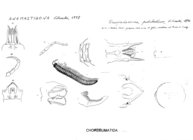
(of Prodicus attemsii Verhoeff, 1900) Verhoeff, K. W. (1900). Beiträge zur Kenntniss paläarktischer Myriopoden. XIII. Aufsatz: Zur vergleichenden Morphologie, Phylogenie, Gruppen- und Art-Systematik der Ascospermophora. Archiv für Naturgeschichte, 66(1): 347-402. Berlin, available online at https://www.biodiversitylibrary.org/page/14103386
page(s): 394-396 [details]
original description (of Craspedosoma pulchellum Silvestri, 1894) Silvestri, F. (1894). Contribuzione alla conoscenza dei Chilopodi, Symphili, Pauropodi e Diplopodi dell'Umbria e del Lazio. Bollettino della Società Romana per gli Studi Zoologici, 3(5-6): 191-201. Roma
page(s): 199 [details]
original description (of Prodicus attemsi Verhoeff, 1900) Verhoeff, K. W. (1900). Beiträge zur Kenntniss paläarktischer Myriopoden. XIII. Aufsatz: Zur vergleichenden Morphologie, Phylogenie, Gruppen- und Art-Systematik der Ascospermophora. Archiv für Naturgeschichte, 66(1): 347-402. Berlin, available online at https://www.biodiversitylibrary.org/page/14103386
page(s): 394 [details]
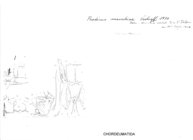
original description (of Prodicus macchiae Verhoeff, 1930) Verhoeff, K. W. (1930). Zur Kenntnis italienischer Diplopoden. 119. Diplopoden-Aufsatz. <em>Zoologische Jahrbücher, Abteilung für Systematik, Ökologie und Geographie der Tiere.</em> 60(3-4): 281-326. Jena.
page(s): 310 [details]
additional source Lindner, N. E.; Reip, H. S.; Spelda, J. (2010). Anamastigona pulchella (Silvestri, 1898) (Diplopoda: Chordeumatida: Anthroleucosomatidae) – ein für Deutschland neuer Tausendfüßer. <em>Schubartiana.</em> 4: 1-8. [details]
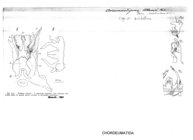
additional source Kime, R. D.; Enghoff, H. (2021). Atlas of European millipedes 3: Order Chordeumatida (Class Diplopoda). <em>European Journal of Taxonomy.</em> 769: 1-244., available online at https://doi.org/10.5852/ejt.2021.769.1497
page(s): 36, Fig. 3D; note: Among stones and leaf litter (Silvestri 1903). The finds from Northern Ireland are from woodland (Anderson 1996); those from Germany, Great Britain and France all seem to be synanthropic (Lindner et...
[details]
page(s): 394-396 [details]
original description (of Craspedosoma pulchellum Silvestri, 1894) Silvestri, F. (1894). Contribuzione alla conoscenza dei Chilopodi, Symphili, Pauropodi e Diplopodi dell'Umbria e del Lazio. Bollettino della Società Romana per gli Studi Zoologici, 3(5-6): 191-201. Roma
page(s): 199 [details]
original description (of Prodicus attemsi Verhoeff, 1900) Verhoeff, K. W. (1900). Beiträge zur Kenntniss paläarktischer Myriopoden. XIII. Aufsatz: Zur vergleichenden Morphologie, Phylogenie, Gruppen- und Art-Systematik der Ascospermophora. Archiv für Naturgeschichte, 66(1): 347-402. Berlin, available online at https://www.biodiversitylibrary.org/page/14103386
page(s): 394 [details]
original description (of Prodicus macchiae Verhoeff, 1930) Verhoeff, K. W. (1930). Zur Kenntnis italienischer Diplopoden. 119. Diplopoden-Aufsatz. <em>Zoologische Jahrbücher, Abteilung für Systematik, Ökologie und Geographie der Tiere.</em> 60(3-4): 281-326. Jena.
page(s): 310 [details]
additional source Lindner, N. E.; Reip, H. S.; Spelda, J. (2010). Anamastigona pulchella (Silvestri, 1898) (Diplopoda: Chordeumatida: Anthroleucosomatidae) – ein für Deutschland neuer Tausendfüßer. <em>Schubartiana.</em> 4: 1-8. [details]
additional source Kime, R. D.; Enghoff, H. (2021). Atlas of European millipedes 3: Order Chordeumatida (Class Diplopoda). <em>European Journal of Taxonomy.</em> 769: 1-244., available online at https://doi.org/10.5852/ejt.2021.769.1497
page(s): 36, Fig. 3D; note: Among stones and leaf litter (Silvestri 1903). The finds from Northern Ireland are from woodland (Anderson 1996); those from Germany, Great Britain and France all seem to be synanthropic (Lindner et...
Among stones and leaf litter (Silvestri 1903). The finds from Northern Ireland are from woodland
(Anderson 1996); those from Germany, Great Britain and France all seem to be synanthropic (Lindner
et al. 2010; Gregory et al. 2015; Geoffroy in litt.). On Madeira, A. pulchella is common in the indigenous
laurel forest (laurisilva) where it was mostly found under leaf litter, but also under stones, under moss
on stones, under bark, in a bracket fungus, and in dead wood; at night it was observed crawling on tree
trunks (HE pers. obs.).
 Present Inaccurate Introduced: alien Containing type locality